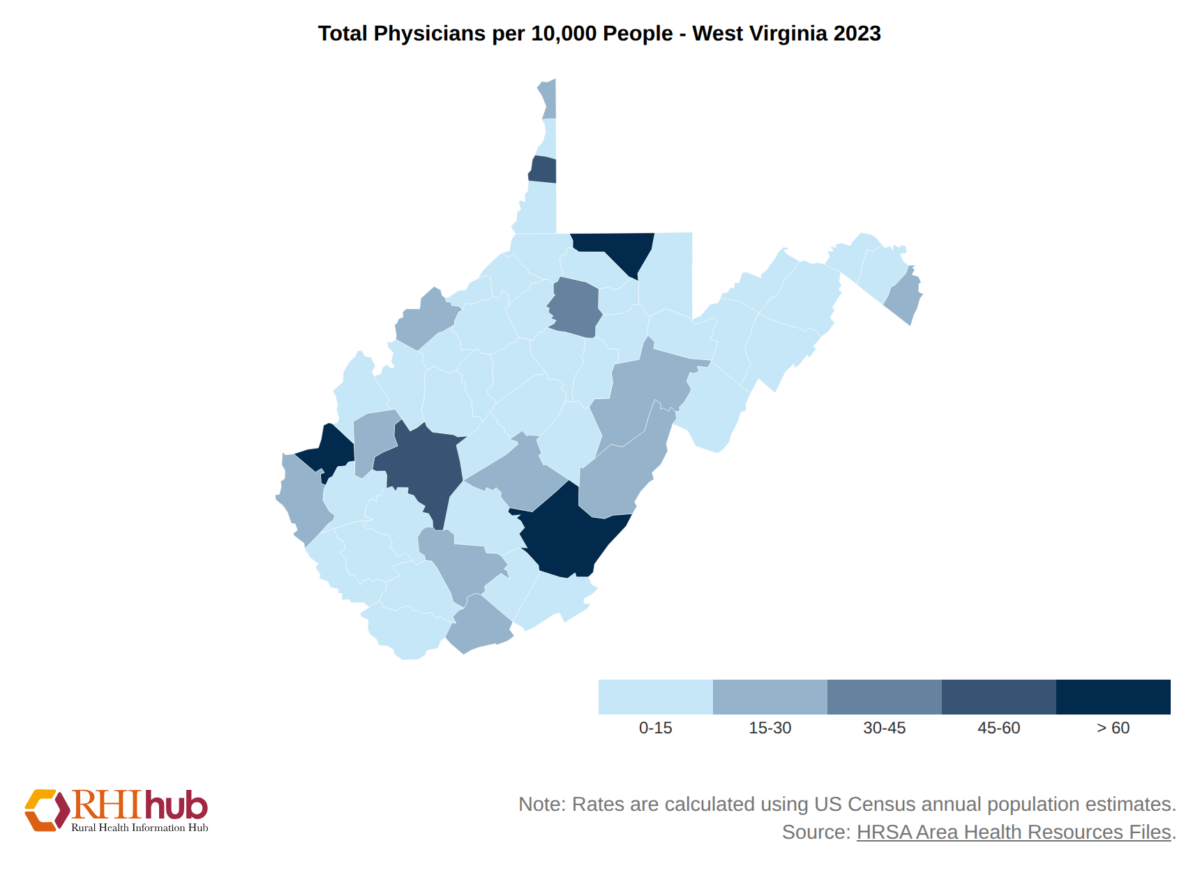
Imagine you live in rural Fayette County. You have a follow-up appointment at Montgomery General Hospital next week, a trip your neighbor is driving you to because you don’t have a car. The doctor thinks you may need to see a specialist, but the closest one is three hours away in Morgantown. You don’t have reliable internet at home, and your phone plan is limited. That appointment might as well be on the moon.
For many patients served by Montgomery General Hospital and the Fayette County Health Department, this isn’t a hypothetical. It’s a familiar kind of impossible. But recent telehealth planning work, made possible through partnerships with Generation West Virginia and the USDA Broadband Technical Assistance Program, is starting to change what’s reachable.
Access to healthcare is the foundation that everything else rests on. In rural communities like Fayette, Lincoln, and Boone Counties, when people can’t reach a doctor, the effects ripple outward: untreated conditions become emergencies, workers miss shifts or leave the workforce, and communities that can’t support the health of their residents struggle to sustain themselves. Telehealth can change that equation, connecting patients to specialists, behavioral health providers, and women’s health services without a hours-long drive. But expanding telehealth and expanding broadband access are the same work. Without reliable connectivity at home, a telehealth appointment is just another resource that exists somewhere out of reach.
Over the past year, Generation West Virginia Broadband Program, thanks to a USDA Broadband Technical Assistance award, supported telehealth planning projects with four rural health systems across Fayette, Boone, and Lincoln Counties. The goal: help each system figure out how to sustainably build and scale telehealth and digital health access for the patients they serve.
The four systems each came with distinct needs. Montgomery General Hospital is working to reach patients who can’t make it to the facility, and to connect those who do show up with specialists at partner hospitals across the state. The Fayette County Health Department is exploring how to reach patients outside the traditional healthcare system and improve access to immediate care. Boone Memorial Hospital is exploring what’s possible for patients across Boone County. And Southern WV Health System is piloting something innovative in Lincoln County: telehealth kits integrated directly into school-based clinics, so a nurse on site can facilitate a provider visit even without a doctor in the building.
To make it happen, Generation West Virginia brought in two specialized firms, Essential Project Management and National Telehealth Advisors, to work alongside each system. Together they assessed existing programs and equipment, engaged staff and leadership to understand workflow needs and build buy-in, and helped each system develop a concrete plan covering equipment, training, and the steps needed to make their programs sustainable long-term.
For Deb Hill at Montgomery General, the value was in the connections it made possible: “Annie [GWV Broadband Program Director] knew how to connect MGH to groups that could turn our strengths and opportunities into plans for action and reduce our weaknesses.” The result is that all four systems are now positioned to pursue funding through programs like the USDA Distance Learning and Telemedicine Grant and West Virginia’s Rural Health Transformation program, including its Connected Care grid flagship initiative. As Teri Harlan, Director of the Fayette County Health Department, put it: “In a very short period of time, the group that worked with us was able to give us valuable tools to move forward. They have put us in a strong position to apply for funding that will allow us to expand the services we provide to the communities we serve.”
Looking Ahead
Southern WV Health System isn’t waiting. They’ve already begun implementation, integrating telehealth kits into their school clinic sites so nurses can facilitate provider visits on location. The other systems are moving forward with their plans, and the Generation West Virginia Broadband Program remains available to support project planning and grant writing as funding opportunities open up.
This work is a reminder that broadband access isn’t just an economic development issue or an education issue. It’s a health issue. When West Virginia communities have reliable connectivity, they can take full advantage of the tools, providers, and programs that already exist. When they don’t, those resources remain just out of reach. Building connected communities is how we make sure the progress happening in Fayette, Lincoln, and Boone Counties can take root and spread. If you’d like to be part of that work, we invite you to join our statewide and regional WV Connected Communities Network Calls, where communities, organizations, and partners across West Virginia share what’s working, surface challenges, and coordinate around opportunities like the ones described here. More information is available at generationwv.org/our-work/broadband/wv-connected-communities.
If you want to hear directly from the people doing this work, mark your calendar: on May 14th, representatives from Southern WV Health System, Montgomery General Hospital, and the Fayette County Health Department will be sharing their experiences and perspectives at Generation West Virginia’s annual conference. More information and registration are available at generationwv.org/pathways-to-progress.